You need a sports drink for that workout

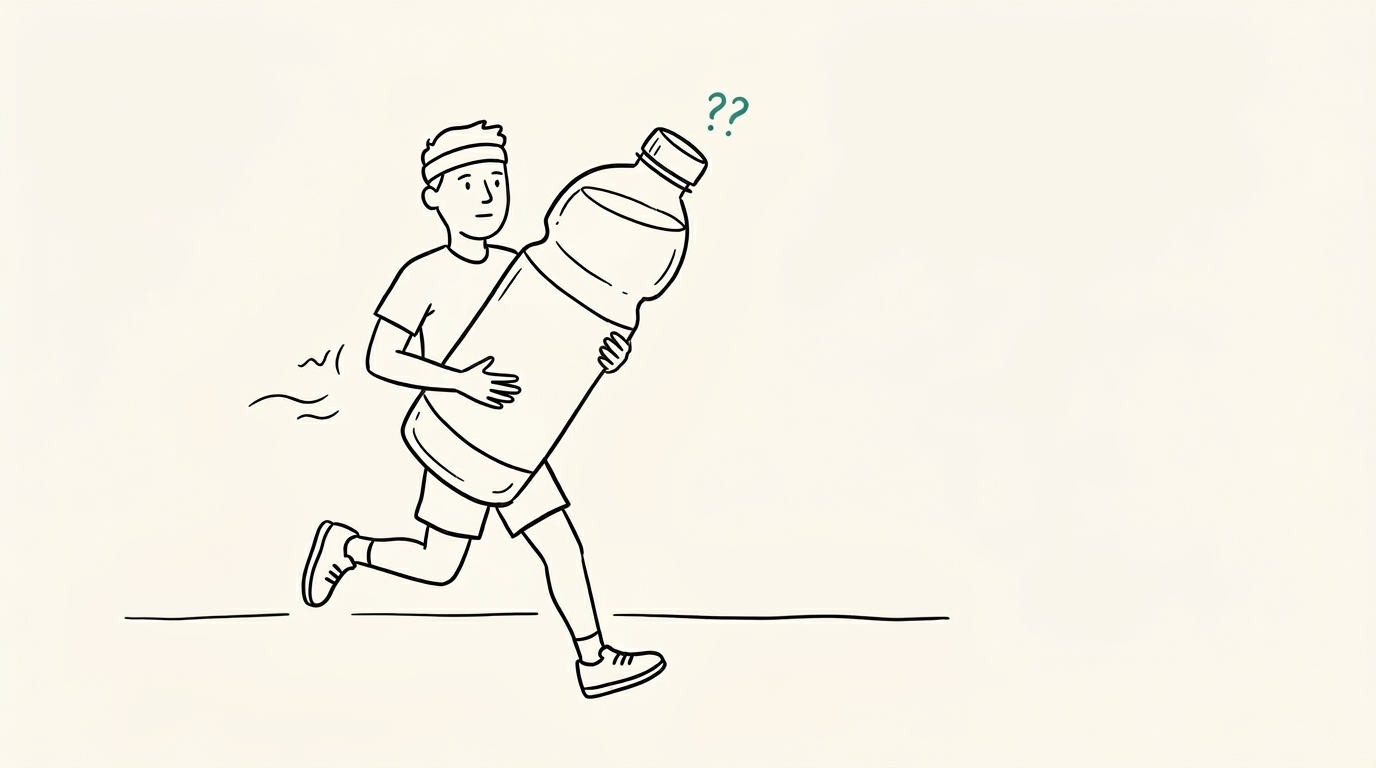
The bottle is bigger than the workout
You've seen it. The thirty-minute jog crowd, carrying a litre of neon liquid like they're starting a stage of the Tour de France. For most workouts under an hour, that bottle is doing nothing your tap can't.
So why does everyone do it?
Why we all bought in
Sports drinks were invented in 1965 for American football players training in 40°C Florida heat. They worked. They still work, in the right context. The problem is what happened next — the marketing budget made the product look universal. Drink this for your run. Drink this for the gym. Drink this for the school run.
I bought in for years. When I was still at my engineering desk job, before I knew anything about how my body actually used food, I'd grab an electrolyte bottle for a forty-five-minute lunchtime run. It felt like discipline. It was actually expensive sugar water for sessions where I needed neither.
What the research actually shows
Asker Jeukendrup, one of the most cited sport-nutrition researchers in the world, summarises the threshold like this: carbohydrate during exercise starts to pay off at around the 60–90 minute mark, and the rate matters more than the brand. Below an hour, for most people, water is enough. Above an hour, you start to need 30–60 grams of carbohydrate per hour to keep glycogen — the carbs stored in your muscle and liver — from running dry.
Electrolytes follow a similar pattern. You lose sodium through sweat, but most people don't sweat enough in a sub-hour session to need replacement. Hot conditions and long sessions change the maths. A casual treadmill run in air conditioning does not.
There's a darker edge here too. Drinking sports drinks when you don't need them isn't just wasted money — it adds 150–300 kcal per bottle that you weren't accounting for. Over a year of "I trained, I earned this," that's a real number.
Three things to try this week
- Match the drink to the session. Under 60 minutes of moderate work → plain water. 60–90 minutes or hot weather → an electrolyte tablet in water. Over 90 minutes or competition → a carbohydrate drink at 30–60 g/hr.
- Weigh yourself before and after one hard session. Every 1 kg of body weight lost ≈ 1 litre of fluid. That's your personal sweat rate. Multiply by hours to plan future sessions.
- Read one label. Pick up the bottle in your gym bag right now. Anything over 8% carbs (above 8 g per 100 ml) is more likely to cause GI distress than help you. Most "isotonic" drinks sit around 6%.
The Fuel Lab's Hydration Decoded mini-course goes deep on this — sweat rate testing, drink selection by sport and conditions, the hyponatraemia risk most people don't know about. Available as a one-off on Whop, or part of Standard membership at $9/month.
See you Wednesday next week.